A couple of years ago, I spent quite a bit of money on “bee friendly” pollinator plants. I thought I was doing the right thing for the bees and the environment. However, from sitting and watching what is happening in my garden, a different story is emerging.
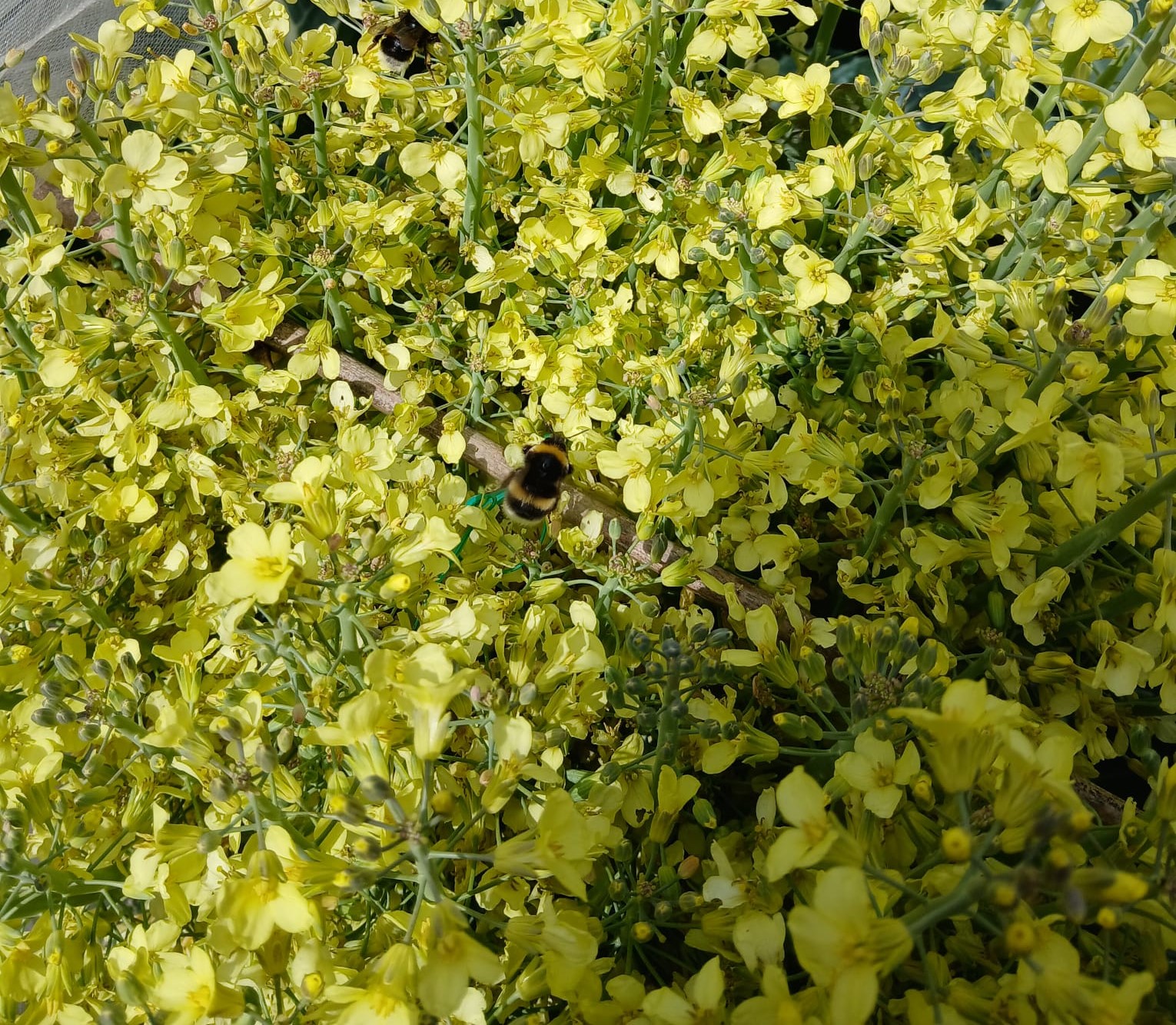
One of the flowers I bought was a geum. It has an open flower head, which is supposed to be easier for the bees to access and more attractive to them. Two years later, I have yet to see a single bee on the plant. Instead, the bees are latching on to snapdragons I grew from seed. The snapdragon head is narrow, so the bees shouldn’t be interested in it. But they are. Likewise with a giant thistle I let grow in the corner: bee paradise. An ancient lavender plant, nearly as old as myself — yes. New lavender plants I bought it last year — no. Or not yet, anyway. The kale went to seed, and the bees swooped in immediately. I have never seen kale on a list of pollinator-friendly plants. But the crowning glory was when the brocoli went to seed. Word spread in the bee nation: broccoli flowers, everyone come! I saw five different types of bees, and they were almost battling each other for the nectar. I have never seen brocoli on a list of pollinator-friendly plants either. It looks to me like the garden centres are selling “pollinator-friendly plants,” but nobody sent the bees the memo. I have concluded that the best thing to do is to observe what is actually happening, as opposed to what is supposed to happen. And to let plants go to seed! I am currently growing organic lettuce from seed I collected last year. So far, I have collected chard seeds and spinach seeds for next year. There is something reassuring about plants producing seeds, despite all the madness going on in the world. For the plants, life goes on, despite whatever dramas we humans create. We have much to learn from the natural world.


Leave a Reply